Best Credit Cards for Beginners USA 2026 Finding the best credit cards for beginners in the USA in 2026 is essential for building a strong credit history and accessing better financial opportunities in the future. Beginner credit cards are specifically designed for people with little or no credit history, offering easier approval, low fees, and simple rewards.
Our team analyzed top-rated beginner credit cards, issuer data, and real user experiences to identify the best starter credit cards available in the United States. This guide highlights the most reliable options for building credit safely and effectively.
Last updated: March 2026 – Based on latest US credit card data and expert analysis.
What Is a Beginner Credit Card?
Building credit from scratch in the U.S. can feel overwhelming, but choosing the right beginner credit card makes the process much easier. The best starter cards in 2026 offer low fees, easy approval, and tools to build your credit score responsibly.
Whether you’re a student, have no credit history, or are rebuilding your score, this guide highlights the top beginner credit cards to help you get started.
A beginner credit card (also called a starter credit card) is designed for people with no credit or limited credit history. These cards typically have:
- Easier approval requirements
- Low or no annual fees
- Lower credit limits
- Tools to help build credit
Starter cards help users establish a credit score by reporting activity to major credit bureaus. ()
Best Credit Cards for Beginners in USA 2026
Here are some of the top beginner-friendly credit cards:
- Discover it® Student Cash Back – Best for students with rewards and no annual fee
- Bank of America® Customized Cash Rewards (Student) – Flexible cashback categories
- Capital One QuicksilverOne Cash Rewards – Simple cashback for everyday spending
- Chase Freedom Rise® – Good for building credit with a major bank
- Capital One Quicksilver Secured Card – Ideal for users with no credit history
These cards are commonly recommended for beginners due to their accessibility and ability to build credit history. ()
Summary of the Best Beginner Cards
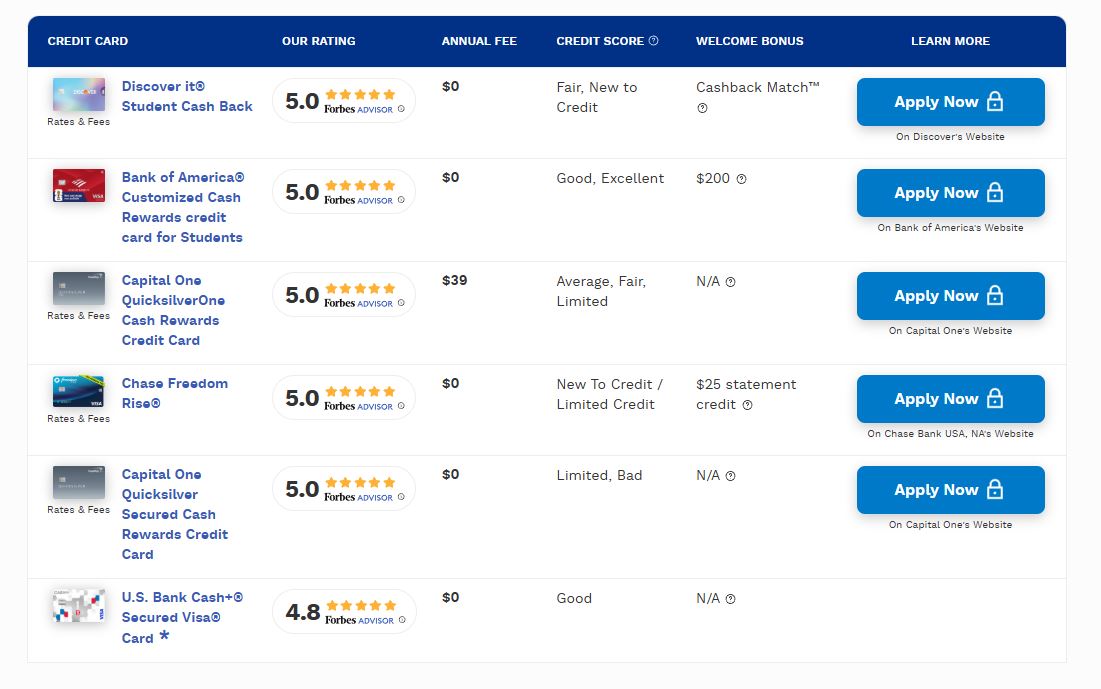
Best Secured Credit Cards for Beginners
Secured credit cards are one of the easiest ways to start building credit.
Top secured options:
- Capital One Quicksilver Secured
- Bank of America Customized Cash Rewards Secured
- Discover it Secured
Secured cards require a refundable deposit, which becomes your credit limit. They are easier to get approved for and help build credit safely.
Best Credit Cards for Students (USA)
Students can access special beginner cards designed for their needs:
- Discover it Student Cash Back
- Bank of America Student Card
- Zolve Classic Credit Card (for international students)
Some cards, like Zolve, even allow approval without a Social Security Number, making them ideal for newcomers in the U.S. ()
How to Choose the Best Beginner Credit Card
Before applying, consider:
- Approval requirements (no credit vs fair credit)
- Annual fee (prefer $0 cards)
- Rewards (cashback or simple points)
- Credit limit
- Reporting to credit bureaus
The best beginner card is one that is easy to get approved for and helps you build credit consistently.
How to Use a Credit Card as a Beginner
To build credit fast and safely:
- Always pay your bill on time
- Keep your balance low (under 30%)
- Use your card regularly
- Avoid maxing out your limit
- Monitor your credit score
Responsible usage is the key to improving your credit score over time.
Frequently Asked Questions
What is the easiest credit card to get in the USA?
Secured credit cards are usually the easiest to get approved for because they require a deposit.
What credit score do beginners need?
Many beginner cards accept applicants with no credit or fair credit (300–670).
Are beginner credit cards worth it?
Yes, they are the best way to build a credit history and qualify for better cards in the future.
About this guide
This page is created to help beginners find the best credit cards in the USA based on real data, expert analysis, and updated rankings.
We review multiple sources, issuer data, and real user experiences to ensure accuracy, reliability, and trustworthiness.