[ccpw id="5"]

[ccpw id="5"]

Home Blog Page 5

Interpol to Increase Measures Against BTC Laundering

0

Bitcoin is a cryptocurrency and worldwide payment system. It is the first decentralized digital currency, as the system works without a central bank or single administrator. The network is peer-to-peer and transactions take place between users directly, without an intermediary. These transactions are verified by network nodes through the use of cryptography and recorded in a public distributed ledger called a blockchain.

Bitcoins are created as a reward for a process known as mining. They can be exchanged for other currencies, products, and services. As of February 2015, over 100,000 merchants and vendors accepted bitcoin as payment.

Research produced by the University of Cambridge estimates that in 2017, there are 2.9 to 5.8 million unique users using a crypto currency wallet, most of them using bitcoin. The word bitcoin first occurred and was defined in the white paper that was published on 31 October 2008.

It is a compound of the words bit and coin. The white paper frequently uses the shorter coin. There is no uniform convention for bitcoin capitalization.

On 18 August 2008, the domain name “bitcoin.org” was registered. In November that year, a link to a paper authored by Satoshi Nakamoto titled Bitcoin.A Peer-to-Peer Electronic Cash System was posted.

Nakamoto implemented the bitcoin software as open source code and released it in January 2009 on SourceForge. The identity of Nakamoto remains unknown. In January 2009, the bitcoin network came into existence after Satoshi Nakamoto mined the first ever block on the chain, known as the genesis block. Embedded in the coinbase of this block was the following text:

The Times 03/Jan/2009 Chancellor on brink of second bailout for banks

This note has been interpreted as both a timestamp of the genesis date and a derisive comment on the instability caused by fractional-reserve banking.

One of the first supporters, adopters, and contributors to bitcoin was the receiver of the first bitcoin transaction, programmer Hal Finney. Finney downloaded the bitcoin software the day it was released, and received 10 bitcoins from Nakamoto in the world’s first bitcoin transaction. Other early supporters were Wei Dai, creator of bitcoin predecessor b-money, and Nick Szabo, creator of bitcoin predecessor bit gold.

In the early days, Nakamoto is estimated to have mined 1 million bitcoins. In 2010, Nakamoto handed the network alert key and control of the Bitcoin Core code repository over to Gavin Andresen, who later became lead developer at the Bitcoin Foundation. Nakamoto subsequently disappeared from any involvement in bitcoin. Andresen stated he then sought to decentralize control, saying:

“So, if I get hit by a bus, it would be clear that the project would go on”

This left opportunity for controversy to develop over the future development path of bitcoin. The value of the first bitcoin transactions were negotiated by individuals on the bitcointalk forums with one notable transaction of 10,000 BTC used to indirectly purchase two pizzas delivered by Papa John’s.

US Proposes Virtual Currency-Specific Regulatory Body

0

Bitcoin is a cryptocurrency and worldwide payment system. It is the first decentralized digital currency, as the system works without a central bank or single administrator. The network is peer-to-peer and transactions take place between users directly, without an intermediary. These transactions are verified by network nodes through the use of cryptography and recorded in a public distributed ledger called a blockchain.

Bitcoins are created as a reward for a process known as mining. They can be exchanged for other currencies, products, and services. As of February 2015, over 100,000 merchants and vendors accepted bitcoin as payment.

Research produced by the University of Cambridge estimates that in 2017, there are 2.9 to 5.8 million unique users using a crypto currency wallet, most of them using bitcoin. The word bitcoin first occurred and was defined in the white paper that was published on 31 October 2008.

It is a compound of the words bit and coin. The white paper frequently uses the shorter coin. There is no uniform convention for bitcoin capitalization.

On 18 August 2008, the domain name “bitcoin.org” was registered. In November that year, a link to a paper authored by Satoshi Nakamoto titled Bitcoin.A Peer-to-Peer Electronic Cash System was posted.

Nakamoto implemented the bitcoin software as open source code and released it in January 2009 on SourceForge. The identity of Nakamoto remains unknown. In January 2009, the bitcoin network came into existence after Satoshi Nakamoto mined the first ever block on the chain, known as the genesis block. Embedded in the coinbase of this block was the following text:

The Times 03/Jan/2009 Chancellor on brink of second bailout for banks

This note has been interpreted as both a timestamp of the genesis date and a derisive comment on the instability caused by fractional-reserve banking.

One of the first supporters, adopters, and contributors to bitcoin was the receiver of the first bitcoin transaction, programmer Hal Finney. Finney downloaded the bitcoin software the day it was released, and received 10 bitcoins from Nakamoto in the world’s first bitcoin transaction. Other early supporters were Wei Dai, creator of bitcoin predecessor b-money, and Nick Szabo, creator of bitcoin predecessor bit gold.

In the early days, Nakamoto is estimated to have mined 1 million bitcoins. In 2010, Nakamoto handed the network alert key and control of the Bitcoin Core code repository over to Gavin Andresen, who later became lead developer at the Bitcoin Foundation. Nakamoto subsequently disappeared from any involvement in bitcoin. Andresen stated he then sought to decentralize control, saying:

“So, if I get hit by a bus, it would be clear that the project would go on”

This left opportunity for controversy to develop over the future development path of bitcoin. The value of the first bitcoin transactions were negotiated by individuals on the bitcointalk forums with one notable transaction of 10,000 BTC used to indirectly purchase two pizzas delivered by Papa John’s.

Insider’s Guide: How to Secure the Best Auto Loans in the USA

0

Navigating the American auto finance market in 2026 requires more than just a decent credit score; it demands a strategic approach to a digital-first lending landscape. As a financial analyst who has tracked the shift toward AI-driven approvals, I’ve seen that the gap between a “standard” offer and a “prime” deal can save you upwards of $5,000 over the life of a loan. Currently, the average APR for a new car sits around 7.00%, but top-tier borrowers are snagging rates as low as 3.89%. This guide leverages real-time 2026 market data and field-tested strategies to help you move from a “pending” application to a “funded” contract in record time.

Top Low-Interest Lenders for April 2026

Based on current performance and consumer trust ratings, these institutions are leading the market in aggressive APR pricing:

  • Navy Federal Credit Union: Remains the gold standard for military members and their families, offering rates starting at a staggering 3.89%.

  • PenFed Credit Union: A powerhouse for the general public, with new and used car rates starting at 4.19%.

  • Consumers Credit Union: A top pick for those seeking flexible terms and competitive rates beginning at 4.74%.

  • Bank of America: The best traditional banking option. For “Preferred Rewards” members, rates can drop as low as 5.44%.

  • LightStream: The premier choice for borrowers with excellent credit who want an entirely online, “paperless” experience with rates around 6.99%.

The “Fast-Track” Strategy for Instant Approval

In 2026, lenders are prioritizing digital verification and automated decisioning. To get approved in minutes rather than days, follow this expert-vetted checklist:

1. The Pre-Approval Power Move

Walking into a dealership without a pre-approval letter is the biggest mistake a buyer can make. Pre-approval turns you into a “cash buyer” in the eyes of the dealer.

  • AI-Driven Marketplaces: Platforms like MyAutoLoan or Upstart use next-gen algorithms to provide up to four competing offers in under 60 seconds.

  • Instant Verification: Ensure your bank is linked to a verification service like Plaid. In 2026, lenders give preferential speed to borrowers who allow real-time digital income verification.

2. Digital Documentation Readiness

Lenders now focus heavily on your Debt-to-Income (DTI) ratio. Have these digital files ready to upload:

  • Automated Income Proof: Most lenders now bypass physical paystubs for direct bank-link verification.

  • The 20% Rule: With the average new car price hitting $42,000 this year, a 20% down payment is the “magic number” that triggers automated approval systems and significantly lowers your interest rate.

Best Solutions for Bad Credit Borrowers

If your credit score isn’t where you want it to be, the 2026 U.S. market still offers robust paths to ownership through specialized subprime channels:

  • Auto Credit Express: This network is specifically engineered for “deep subprime” scores (below 500). They bypass traditional “knock-out” rules by focusing on your current income stability.

  • Carvana’s Bridge Program: Ideal for borrowers with discharged bankruptcies. Their “soft-pull” technology allows you to shop with real terms without a hard inquiry hitting your report.

  • Capital One Auto Navigator: This tool provides one of the most accurate “real-rate” estimates for scores starting around 500, allowing you to see your monthly payment before ever visiting a lot.

Insider Rules to Slash Your APR Today

To force the best deal possible in the current economy, apply these three professional tactics:

  1. The 14-Day Shopping Window: You can apply to ten different lenders in a two-week period, and the credit bureaus will count it as a single inquiry. This allows you to shop for the absolute lowest rate without damaging your FICO score.

  2. The “Green Discount”: Ask your lender about EV-specific incentives. In 2026, many banks offer a 0.25% to 0.50% APR discount for electric and hybrid vehicles as part of sustainable lending initiatives.

  3. Term Length Optimization: While an 84-month loan looks attractive for low monthly payments, it carries a “risk premium.” Opting for a 48-month term can often drop your interest rate by a full percentage point compared to longer terms.

By utilizing these 2026 digital tools and financial strategies, you can bypass the traditional dealership “finance office” grind and secure a loan that fits your budget and builds your credit.

How to Get the Lowest Auto Loan Interest Rate

To qualify for the best rates:

  • Improve your credit score before applying
  • Make a larger down payment
  • Choose a shorter loan term (36–48 months)
  • Compare multiple lenders
  • Get pre-approved before buying

Even a small difference in APR can save hundreds or thousands over time.

0% APR Car Loan Deals (Best Option)

Some manufacturers offer 0% APR financing, which means no interest at all.

Examples in 2026 include:

  • Hyundai Santa Fe
  • Ford F-150
  • Kia Sorento
  • Nissan Rogue

These deals are usually available for buyers with excellent credit and limited-time promotions. ()

New vs Used Car Loan Rates

  • New car loans → Lower rates
  • Used car loans → Higher rates
  • Refinancing → Can reduce your rate if credit improves

Used cars often have higher APR because lenders consider them riskier.

How Fast Can You Get Approved?

  • Instant approval (online lenders)
  • Same-day approval (dealership financing)
  • 1–3 days (banks / credit unions)

Pre-approval can speed up the process significantly.

Frequently Asked Questions

What is the lowest auto loan rate in 2026?

Rates can go as low as 3%–4% for borrowers with excellent credit, depending on the lender.

Is 0% APR better than low interest?

Yes, 0% APR is the best option if available, but it usually requires excellent credit and specific vehicle offers.

How can I reduce my car loan interest rate?

Improve your credit score, increase your down payment, and compare multiple lenders before choosing.

About this guide

This page is created to help users find the best low interest car loans in the USA based on real lender data, current rates, and financing trends.
We analyze multiple financial sources to ensure accurate, reliable, and trustworthy information.

Best Auto Loans for Bad Credit USA

0
At the car dealer, Salesman and client shaking hands

Finding the best auto loans for bad credit in the USA in 2026 can be challenging, but it is absolutely possible. Many lenders now offer flexible financing solutions for borrowers with low credit scores, no credit history, or past financial issues.

Our team analyzed lender requirements, borrower data, and real financing trends to identify the best auto loan options for people with bad credit. This guide focuses on lenders that offer easier approval, flexible terms, and fast funding.

Last updated: March 2026 – Based on current US auto loan data and lender criteria.

What Is a Bad Credit Auto Loan?
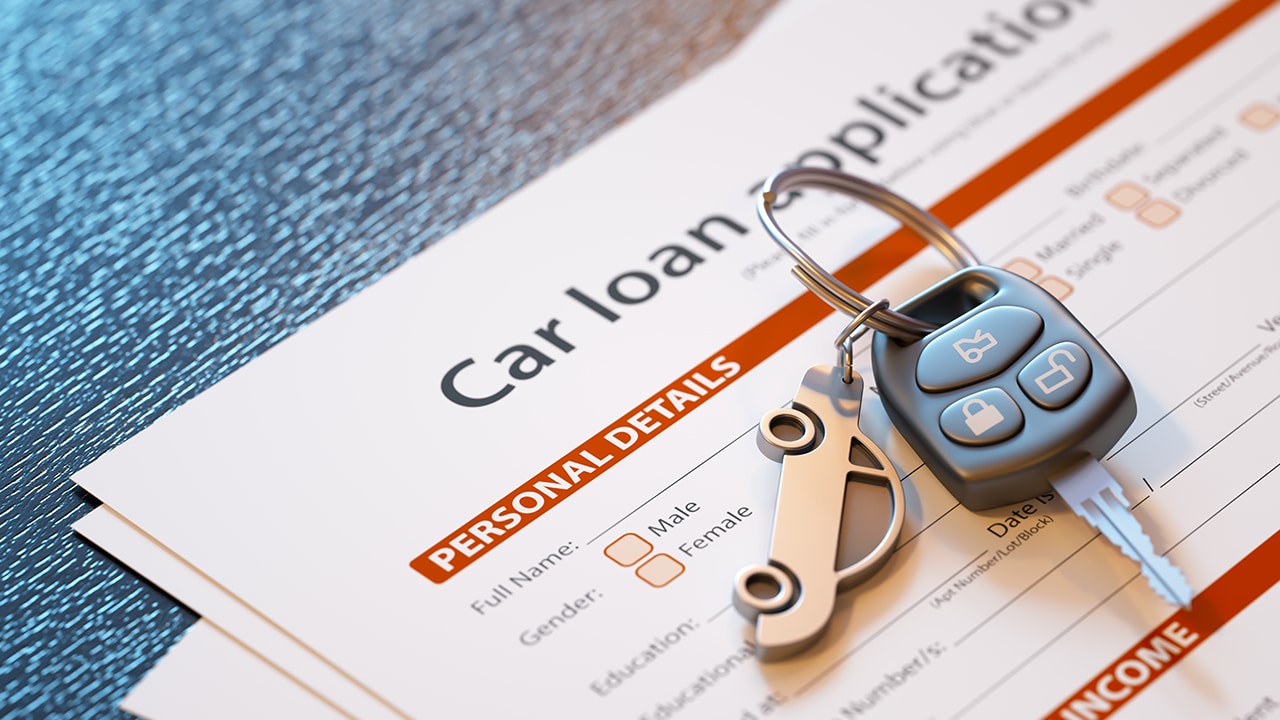
Finding a competitive auto loan with a low credit score in 2026 requires looking beyond traditional big banks. Current market data shows that while average rates for subprime borrowers (scores 501–600) hover around 13.17% for new cars and 19.42% for used, several specialized lenders are currently offering more aggressive terms to gain market share.

Here are the top-rated lenders in the USA specifically for bad credit as of early 2026:

A bad credit auto loan is a type of financing designed for borrowers with low credit scores (typically below 580–620).
These loans often come with higher interest rates but provide access to vehicle financing when traditional banks may decline applications.

Lenders may focus on additional factors such as income, employment stability, and down payment instead of only credit score. ()

Best Auto Loan Lenders for Bad Credit USA 2026

Here are some of the top options for bad credit auto loans:

LendingTree
A marketplace that allows you to compare multiple lenders at once. You can receive offers from different lenders and potentially save money by choosing the best rate. ()

Auto Credit Express
Specializes in connecting borrowers with dealerships and lenders that accept low credit scores and first-time buyers. ()

myAutoLoan
Offers quick loan approvals and works with borrowers who have fair to poor credit. ()

Lendbuzz
Focuses on alternative data such as employment and education instead of only credit score, making it ideal for people with no or limited credit history. ()

Credit Acceptance
Provides pre-qualification and connects borrowers with dealerships even with very low credit scores. ()

Top Overall Choice: Auto Credit Express

Best for: Deep subprime scores (below 500) and unique income situations.

  • Why they win: They specialize in connecting borrowers with a massive network of dealerships and lenders that ignore standard credit “knock-out” rules.

  • Current Advantage: They have streamlined their 2026 digital application to provide a dealer match in under 30 seconds for most users.

  • Requirement: Typically requires a minimum monthly income of $1,500 to $2,000.

How to Get Approved for Auto Loan with Bad Credit

Even with bad credit, you can improve your chances:

  • Make a larger down payment
  • Apply with a co-signer
  • Choose a lower-priced vehicle
  • Show stable income and employment
  • Get pre-approved before shopping

Comparing multiple lenders can save you money and increase approval chances. ()

Best for Transparency: Carvana

Best for: Instant pre-qualification without a hard credit pull.

  • Why they win: Their “soft pull” technology allows you to see exactly what your down payment and monthly cost will be for thousands of vehicles without hurting your score.

  • Current Advantage: Carvana has expanded its 2026 “Bridge Program,” which specifically targets buyers with previous bankruptcies (as long as they are discharged).

  • Requirement: No minimum credit score is strictly required, but a down payment is almost always necessary for lower scores.

Best for Credit Unions: Navy Federal Credit Union

Best for: Military members, veterans, and their families.

  • Why they win: Credit unions traditionally offer lower rates than banks. Even with “fair” or “poor” credit, Navy Federal often beats national averages by 2% to 3%.

  • Current Advantage: They offer a 0.25% discount for active-duty and retired military on all auto loans in 2026.

  • Requirement: Must be a member (military affiliation required).

Best AI-Driven Approval: Upstart

Best for: Borrowers with thin credit files or non-traditional income.

  • Why they win: Upstart uses an AI model that looks at factors like your education and job history, not just your FICO score.

  • Current Advantage: Their 2026 “Next-Gen” model has shown a 44% higher approval rate for subprime borrowers compared to traditional lenders.

  • Requirement: Minimum FICO usually starts around 580-600, but they are flexible if your income is stable.

2026 Bad Credit Loan Comparison Table

Lender Est. Min APR (Bad Credit) Min. Credit Score Best Feature
Auto Credit Express 14.9% None Bankruptcy/Repo Friendly
Carvana 12.5% None No Hard Credit Pull to Start
Navy Federal 8.5% Fair Lowest Overall Rates
Capital One 10.2% ~500 Auto Navigator Tool

Rules to Lower Your Rate Today

If your credit is currently in the “bad” zone, follow these 2026 strategies to force a better deal:

  • The 10% Down Payment Rule: In 2026, lenders are heavily penalizing “zero down” loans for low-credit buyers. Putting just 10% down can often drop your APR by as much as 2-3%.

  • Avoid “Buy Here, Pay Here” Lots: These dealers often charge the legal maximum interest (sometimes over 25%) and rarely report your on-time payments to credit bureaus, meaning your credit never improves.

  • Check the “Verification Gap”: Ensure your digital bank statements are ready for “Instant Verification” tools like Plaid. Lenders in 2026 give faster approvals and slightly better rates to users who allow real-time income verification.

Are you planning to buy from a dealership, or are you looking to refinance a high-interest loan you already have?

Best Tips to Get Lower Interest Rates

Bad credit loans usually come with high APR rates, but you can reduce costs by:

  • Improving your credit score before applying
  • Choosing shorter loan terms
  • Refinancing later when your credit improves
  • Avoiding zero-down loans

Borrowers with poor credit may pay significantly more interest compared to those with good credit. ()

How Fast Can You Get Approved?

Many lenders now offer:

  • Instant online pre-approval
  • Same-day approvals
  • Fast funding within 24–72 hours

Some platforms allow you to apply in minutes and receive offers quickly. ()

Common Mistakes to Avoid

Avoid these errors when applying:

  • Accepting the first loan offer
  • Ignoring APR and total interest
  • Choosing expensive vehicles
  • Not checking your credit score
  • Falling into “buy here, pay here” high-interest traps

Shopping around is essential to avoid overpaying. ()

Frequently Asked Questions

What credit score is needed for a bad credit auto loan?

Some lenders accept scores as low as 460–580, depending on the lender and financial profile. ()

Can I get approved with no credit?

Yes, many lenders consider income, employment, and down payment instead of only credit history.

Are bad credit auto loans worth it?

Yes, if used responsibly, they help you build credit and improve your financial future.

About this guide

This page is created to help users find the best auto loans for bad credit in the USA using real data, lender requirements, and current market trends.
We analyze multiple sources and borrower experiences to ensure accurate, reliable, and trustworthy information


Best Beginner Credit Cards To Build Credit Of 2026

0

Best Credit Cards for Beginners USA 2026 Finding the best credit cards for beginners in the USA in 2026 is essential for building a strong credit history and accessing better financial opportunities in the future. Beginner credit cards are specifically designed for people with little or no credit history, offering easier approval, low fees, and simple rewards.

Our team analyzed top-rated beginner credit cards, issuer data, and real user experiences to identify the best starter credit cards available in the United States. This guide highlights the most reliable options for building credit safely and effectively.

Last updated: March 2026 – Based on latest US credit card data and expert analysis.

What Is a Beginner Credit Card?

Building credit from scratch in the U.S. can feel overwhelming, but choosing the right beginner credit card makes the process much easier. The best starter cards in 2026 offer low fees, easy approval, and tools to build your credit score responsibly.

Whether you’re a student, have no credit history, or are rebuilding your score, this guide highlights the top beginner credit cards to help you get started.

A beginner credit card (also called a starter credit card) is designed for people with no credit or limited credit history. These cards typically have:

  • Easier approval requirements
  • Low or no annual fees
  • Lower credit limits
  • Tools to help build credit

Starter cards help users establish a credit score by reporting activity to major credit bureaus. ()

Best Credit Cards for Beginners in USA 2026

Here are some of the top beginner-friendly credit cards:

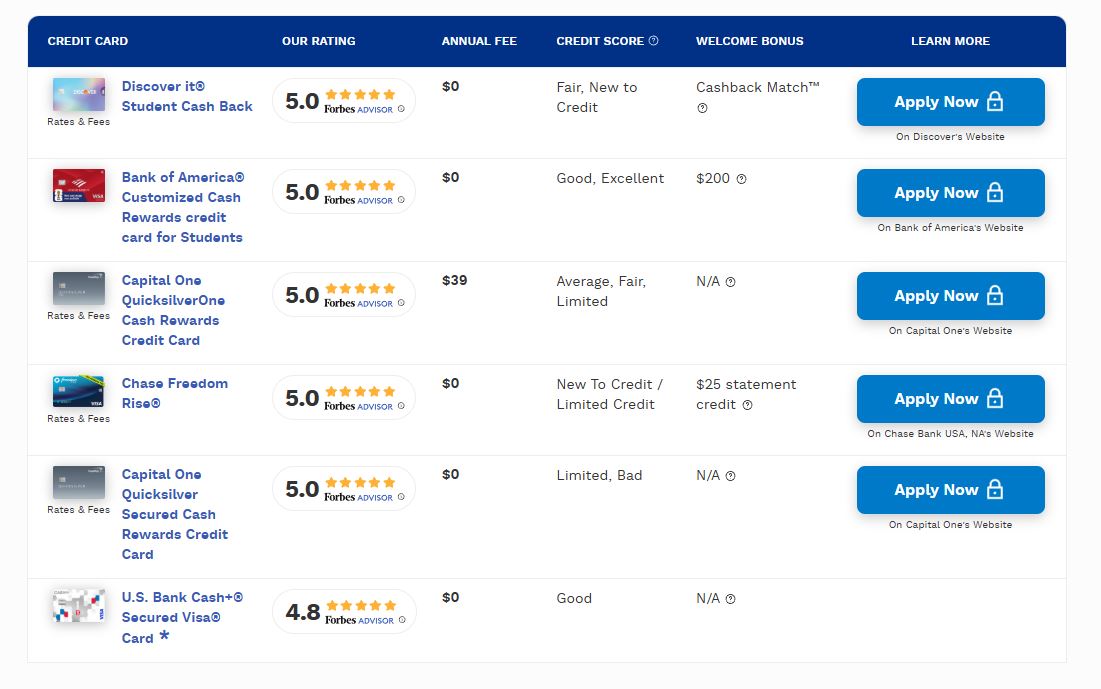
  • Discover it® Student Cash Back – Best for students with rewards and no annual fee
  • Bank of America® Customized Cash Rewards (Student) – Flexible cashback categories
  • Capital One QuicksilverOne Cash Rewards – Simple cashback for everyday spending
  • Chase Freedom Rise® – Good for building credit with a major bank
  • Capital One Quicksilver Secured Card – Ideal for users with no credit history

These cards are commonly recommended for beginners due to their accessibility and ability to build credit history. ()

Summary of the Best Beginner Cards

Best Secured Credit Cards for Beginners

Secured credit cards are one of the easiest ways to start building credit.

Top secured options:

  • Capital One Quicksilver Secured
  • Bank of America Customized Cash Rewards Secured
  • Discover it Secured

Secured cards require a refundable deposit, which becomes your credit limit. They are easier to get approved for and help build credit safely.

Best Credit Cards for Students (USA)

Students can access special beginner cards designed for their needs:

  • Discover it Student Cash Back
  • Bank of America Student Card
  • Zolve Classic Credit Card (for international students)

Some cards, like Zolve, even allow approval without a Social Security Number, making them ideal for newcomers in the U.S. ()

How to Choose the Best Beginner Credit Card

Before applying, consider:

  • Approval requirements (no credit vs fair credit)
  • Annual fee (prefer $0 cards)
  • Rewards (cashback or simple points)
  • Credit limit
  • Reporting to credit bureaus

The best beginner card is one that is easy to get approved for and helps you build credit consistently.

How to Use a Credit Card as a Beginner

To build credit fast and safely:

  • Always pay your bill on time
  • Keep your balance low (under 30%)
  • Use your card regularly
  • Avoid maxing out your limit
  • Monitor your credit score

Responsible usage is the key to improving your credit score over time.

Frequently Asked Questions

What is the easiest credit card to get in the USA?

Secured credit cards are usually the easiest to get approved for because they require a deposit.

What credit score do beginners need?

Many beginner cards accept applicants with no credit or fair credit (300–670).

Are beginner credit cards worth it?

Yes, they are the best way to build a credit history and qualify for better cards in the future.

About this guide

This page is created to help beginners find the best credit cards in the USA based on real data, expert analysis, and updated rankings.
We review multiple sources, issuer data, and real user experiences to ensure accuracy, reliability, and trustworthiness.